
The development status of laser metal cutting machines
Publishing time.
Nov 17,2020
Compared with traditional cutting processes such as oxygen-acetylene and plasma cutting, laser metal cutting machines have advantages such as fast cutting speed, narrow cutting seams, small heat-affected zones, good verticality, and smooth cutting edges. At the same time, laser metal cutting machines can cut a variety of materials, including carbon steel, stainless steel, alloy steel, wood, plastic, rubber, fabric, ceramics, glass, and composite materials. Currently, the overall level of laser cutting technology in our country still has a significant gap compared to advanced countries. Therefore, laser cutting technology has broad development prospects and huge application space in the domestic market.
Compared with traditional cutting processes such as oxygen-acetylene and plasma, laser metal cutting machines have advantages such as fast cutting speed, narrow cutting seams, small heat-affected zones, good perpendicularity, and smooth cutting edges. At the same time, the materials that laser metal cutting machines can cut include a variety of materials such as carbon steel, stainless steel, alloy steel, wood, plastic, rubber, fabric, ceramics, glass, and composite materials. Currently, there is still a significant gap between the overall level of laser cutting technology in our country and that of advanced countries. Therefore, laser cutting technology has broad development prospects and huge application space in the domestic market.
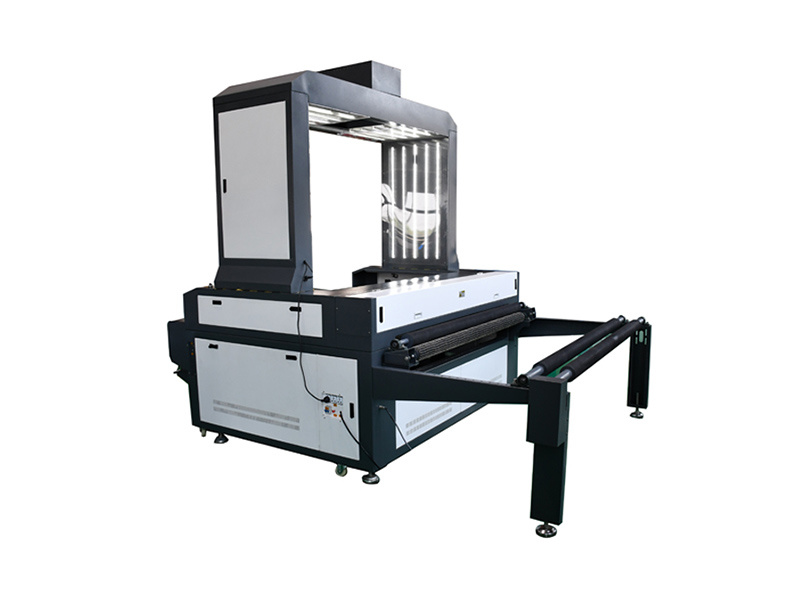
During the cutting process of the laser metal cutting machine, the beam is focused into a small focal point through the lens of the cutting head, achieving a high power density at the focal point, with the cutting head fixed on the Z-axis. At this time, the heat input from the beam far exceeds the portion of heat reflected, conducted, or diffused by the material, and the material is rapidly heated to melting and vaporization temperatures. Meanwhile, high-speed airflow blows the melted and evaporated material from the coaxial or non-coaxial side, forming holes for cutting the material. As the focal point moves relative to the material, a continuous narrow slit is formed, and the material is cut.
Due to manufacturing costs and other reasons, the laser beam emitted by civilian laser generators has a certain divergence angle, forming a "conical" shape. When the height of the "cone" changes (equivalent to a change in the optical path length of the laser metal cutting machine), the cross-sectional area of the beam on the surface of the focusing lens also changes. In addition, light also has wave properties, so diffraction phenomena inevitably occur, causing the beam to expand laterally during propagation. This phenomenon exists in all optical systems and can determine the theoretical limits of these systems in terms of performance. Since Gaussian beams are conical and diffracted by light waves, the diameter of the beam acting on the surface of the lens changes at all times when the optical path length changes, which causes changes in the size and depth of the focal point, but has little effect on the position of the focal point. If the size and depth of the focal point change during continuous processing, it will inevitably have a significant impact on the processing, such as causing inconsistent cutting seam widths, and not penetrating or ablating the plate at the same cutting power.
BLOGS

Understanding CNC Fiber Laser Cutting Machines: Revolutionizing Industrial Cutting Processes
CNC Fiber Laser Cutting Machines are an innovative solution in the realm of industrial cutting equipment. Utilizing advanced laser technology, these machines excel in precision and speed, making them a preferred choice for various manufacturing processes. Unlike traditional cutting methods, fiber laser cutting employs a focused beam of light to cut through materials, resulting in cleaner edges and

Why High Power Fiber Laser Cutting Machines Are Revolutionizing Industrial Cutting
Why High Power Fiber Laser Cutting Machines Are Revolutionizing Industrial Cutting Table of Contents 1. Introduction to Fiber Laser Cutting Technology 2. Understanding High Power Fiber Laser Cutting Machines 3. Benefits and Applications of High Power Fiber Laser Cutters 3.1 Exceptional Precision in Cutting 3.2 Enhanced Cutting Efficiency 3.


Unlocking Precision: The Advantages of Fiber Laser Cutting Machines in Today's Industrial Landscape
--- Precision Fiber Laser Cutting Machines have emerged as a transformative technology within the industrial equipment sector, particularly in cutting applications. These machines leverage advanced fiber laser technology to deliver exceptional cutting precision, speed, and efficiency, setting a new standard in the manufacturing environment. One of the most significant advantages of Precision Fiber

The Future of Cutting: Why You Need a Plate Tube Integrated Fiber Laser Cutting Machine
The Future of Cutting: Why You Need a Plate Tube Integrated Fiber Laser Cutting Machine Table of Contents Introduction to Fiber Laser Cutting Technology Understanding Plate Tube Integrated Fiber Laser Cutting Benefits of Integrated Fiber Laser Cutting Machines Applications of Fiber Laser Cutting Technology Comparison with Traditional Cutting Methods Key Featu

Unlocking Precision: The Advantages of Fiber Laser Pipe Cutting Machines
In the realm of industrial equipment, fiber laser pipe cutting machines have emerged as a game-changer for precision cutting applications. These machines utilize high-performance fiber laser technology to produce intricate cuts on various types of pipe materials, including steel, aluminum, and copper. One of the primary advantages of fiber laser cutting is its unparalleled accuracy. The focused be
Guo Zong:
+86-13963538263
+86-18663587877
Manager Feng:
+86-13869521596
E-mail:
lchrkj@163.com
Address:
Room 1045, 4th Floor, South Building, Dongdongmingzhu No.1 Auto Trade City, intersection of North Outer Ring Road and Liuyuan North Road, Dongchangfu District, Liaocheng City, Shandong Province (Yuehua Company)
Factory Address:
Phase 1, Gathering Industrial Park, Maxi Village, Hedian Town, Xin County, Liaocheng City, Shandong Province

Sales


Get the best price for your product
